Postpartum hair loss — clinically called telogen effluvium gravidarum — is the shed that catches most new mothers off-guard around month three. It is not a sign that something is wrong. It is a hormonal correction, and it is almost always temporary.
This guide gives you the honest timeline (when it starts, when it peaks, when it stops), the science of why it happens, and the small number of things that actually make a measurable difference.
The short answer
Most women start losing more hair than usual 2 to 4 months after giving birth. The shedding peaks around month 4 to 6, then tapers off. Hair density typically returns to your pre-pregnancy baseline somewhere between 6 and 12 months postpartum. By month 15, most of the regrowth is visibly back in.
The hair you are losing is not new — it is the hair you would have lost across pregnancy and held onto. Oestrogen kept it in the growth phase. Now that oestrogen has dropped, all of those hairs enter the shedding phase at roughly the same time. It looks dramatic. It is not pathological.
Why it happens — the actual mechanism
In a normal hair cycle, about 85 to 90 percent of the hairs on your scalp are in the anagen (growth) phase at any given time, with the remaining 10 to 15 percent in the telogen (resting / shedding) phase. During pregnancy, high oestrogen levels extend the anagen phase. The percentage of hairs in the resting phase drops. Your hair looks fuller and feels thicker — many women describe their best-ever hair during the second and third trimesters.
Within 24 to 48 hours of delivery, oestrogen plunges. Over the following 8 to 12 weeks, the hairs that were artificially held in the growth phase begin to shift back into telogen. About three months later — which is the lag time between a hair entering telogen and physically falling out — they release. All at once.
This is why postpartum shedding is so concentrated and so noticeable. You are not losing extra hair. You are losing it in batches that would normally have shed over 18 months.
What it looks like, and what is not normal
Expected: hair on your pillow, in the shower, in your brush. Visible thinning at the temples and along the front hairline is common — you may notice a halo of shorter regrowth hairs there around month 8 to 10. The crown may feel slightly thinner. The shed is diffuse, not patchy.
Worth checking with a GP: circular bald patches (suggests alopecia areata, not telogen effluvium), painful scalp, hair loss that is still actively progressing past month 12, or shedding accompanied by extreme fatigue, cold intolerance, weight changes or brain fog (suggests possible postpartum thyroiditis, which affects around 5 percent of women in the year after birth and is highly treatable).
If you are still actively losing past 12 months, the NHS recommends checking ferritin (iron stores), TSH (thyroid) and vitamin D as a baseline.
What actually helps (and what doesn't)
Helps, evidence-based:
- Iron sufficiency. Low ferritin (especially below 30 ng/mL) is independently linked to telogen effluvium. Check with your GP — supplementation only if low. Do not self-prescribe iron.
- Protein adequacy. Hair is keratin. Adequate protein intake (around 1.2 to 1.6 g per kg of body weight, especially if breastfeeding) supports regrowth.
- Sleep, where it exists. Chronic sleep restriction prolongs the telogen phase. This is one of the cruel ironies of postpartum hair loss — the very thing that helps is the thing newborn life makes hardest.
- Reducing physical traction. Tight ponytails, tight buns, and heat styling on already-fragile hair worsen breakage that visually compounds the shed. Loose styling, low heat, microfibre towels rather than rough rubbing.
- Topical minoxidil 5 percent. Not first line, but evidence-based if regrowth feels stalled at month 9 to 12. Not generally recommended while breastfeeding — discuss with a GP first.
Doesn't help (despite the marketing):
- Most "postpartum hair vitamins" — they tend to be repackaged prenatals at a markup. If your diet is adequate and your bloods are fine, they will not move the needle.
- Caffeine shampoos, "thickening" sprays, scalp oils sold for postpartum specifically. They might add cosmetic thickness for a day. They do not change the cycle.
- "Stress-reduction" courses sold as the answer. Stress matters in chronic telogen effluvium. It is not the main driver here. The driver is the hormonal cliff, which will correct itself.
The skincare angle most women miss
The same oestrogen drop that triggers the shed also changes the scalp's sebum profile. Many women find their scalp becomes drier, flakier or itchier in the months around month 4 to 8. A scalp that is irritated sheds more. So a gentle scalp routine — avoiding sulphate-heavy shampoos, washing slightly less often if your scalp is dry, applying a thin layer of a fragrance-free moisturiser along the hairline at night if it feels tight — quietly supports the recovery.
The face changes too. Estrogen withdrawal is one of the reasons the skin of the cheeks, temples and jawline can feel suddenly drier or more reactive in the same window. A body cream with a strong barrier-repair profile (squalane, ceramides, glycerin — fragrance-free) used daily, including along the front hairline if it feels tight, is one of the small habits that compounds.
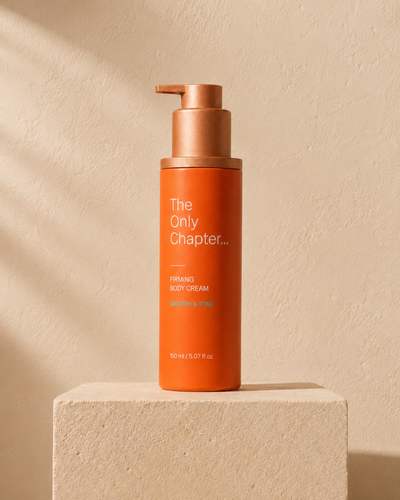
If you want one product to anchor the months when everything feels brittle, the Firming Body Cream is built around squalane and a peptide complex, fragrance-free, and pregnancy and breastfeeding safe — it works for face and body and is what we use along our own hairlines through month 4 to 8.
What we tell our customers
If you are in the middle of the shed: this is the moment to stop fighting it. The hair you are losing was never yours to keep in that quantity — it was a pregnancy artefact. Your body is recalibrating, not failing. The regrowth is already coming. You will see it as soft shorter hairs around your hairline somewhere between month 8 and 12. Many women come out of the cycle with hair quality and density better than before, because the pregnancy growth phase essentially gave the follicles an extended rest.
For the in-between months, the brand-aligned routine is: protein on every meal, iron checked if you feel run down, loose styling, low heat, gentle on the scalp, fragrance-free body cream daily, and patience. That is the entire postpartum hair playbook.
FAQ
When does postpartum hair loss start?
Most women notice it between 2 and 4 months after birth. Earlier or later is common too — the window is wide. The shed itself usually peaks around month 4 to 6.
How long does postpartum hair loss last?
The active shedding lasts about 3 to 6 months. Visible regrowth comes through over months 8 to 15. Most women are back to their pre-pregnancy density by month 12, with the last regrowth filling in by month 15.
Is postpartum hair loss normal at 6 months?
Yes — it is the most common peak month. If shedding is still active and visible at 12 months, that is the point to check ferritin, thyroid (TSH) and vitamin D with your GP.
Does breastfeeding cause hair loss?
Breastfeeding itself does not cause it. The hair loss is the oestrogen drop after birth — it happens whether you breastfeed or not. Breastfeeding may slightly extend the timeline (the hormonal recalibration takes longer while lactating), but the cause is the same.
Can I take supplements to stop postpartum hair loss?
If your bloods are normal, supplements will not stop the shed — it is a hormonal cycle that needs to complete. If your ferritin is low or you are vitamin D deficient, correcting those will help. Do not self-prescribe iron — it is one of the few supplements where excess is genuinely harmful.