Cracked nipples are one of the most under-discussed early-breastfeeding realities. By the second week, around 30 percent of breastfeeding mothers have visible cracks, fissures or bleeding. The standard recommendation, especially in the UK, is medical-grade lanolin. It works for many women. It is also one of the most common reasons women quietly switch products or stop applying anything at all.
Here is what to use when lanolin is the problem, or when lanolin alone is not healing the cracks fast enough.
The lanolin problem
Lanolin is the natural wax secreted by sheep, refined for skincare. It is occlusive (locks moisture in) and considered safe for breastfeeding because it does not need to be removed before nursing. Most NHS midwives recommend it as the first-line treatment.
But: somewhere between 10 and 15 percent of breastfeeding mothers develop a sensitivity or true allergy to lanolin. The reaction is rarely dramatic — usually a slow worsening of soreness, an itchy or burning quality, sometimes a small rash around the nipple base. Because mothers often assume the problem is the cracking getting worse (not the product), the reaction goes undiagnosed for weeks.
Lanolin is also a thick wax. Thick waxes can trap fluid against an open wound, which can occasionally slow healing or trap bacteria — particularly relevant if you have ongoing cracks beyond week three.
Lanolin-free alternatives that work
1. Hydrogel breast pads (the most underused option)
Sterile hydrogel pads — soaked in saline — provide cool, moist wound healing. They are evidence-based for fast crack closure (a 2015 Cochrane review found them superior to lanolin for healing time in moderate-severe cracks). They are widely available in UK pharmacies and on the NHS in some areas. Use between feeds. Replace every 24 hours. Refrigerate for additional comfort.
2. A balm with a clean, simple base — not lanolin, not petrolatum
Look for: refined shea butter, allantoin, panthenol (provitamin B5), squalane, calendula extract. These are wound-supportive without being heavy, occlusive in the way that traps fluid. They are also safer to leave on between feeds — most do not need to be wiped off before the baby latches.
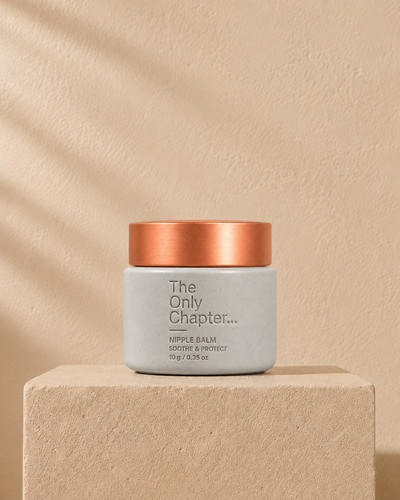
Our Nipple Balm is built on exactly this — refined shea, allantoin, panthenol, organic calendula. Lanolin-free by design. The base spreads thinly without pooling, and it is food-grade safe so it does not need to be wiped before feeds.
3. Expressed breast milk on the crack
This is the oldest and one of the most overlooked. Expressed breast milk contains lactoferrin, IgA, lysozyme and growth factors — it has documented antimicrobial and wound-healing properties. After a feed, hand-express a few drops onto the crack, let it air-dry, then apply your chosen balm. Free, available, and one of the most consistent NHS recommendations after lanolin itself.
4. Saline rinses, not soap
Do not wash the nipples with soap or antibacterial wash. The cracked nipple is a wound — soap strips the protective lipid layer and irritates the skin further. A daily saline rinse (1 teaspoon salt in 1 cup of warm boiled water) cleans the area without disrupting healing.
The thing that matters more than any product: the latch
Cracked nipples are almost always a sign of a sub-optimal latch. The crack is the symptom; the latch is the cause. The best balm in the world cannot keep up with a baby that is repeatedly chewing the nipple in the wrong position.
Signs the latch is off: visible flattening or wedge-shape of the nipple after feeds, persistent pain throughout the feed (not just initial discomfort), repeated cracking even after healing, white-stripe or blanched nipple after feeds.
In the UK, free help is available: NHS Infant Feeding Specialists, La Leche League UK, NCT breastfeeding counsellors (free helpline 0300 330 0700), or an IBCLC private consultation (around £80–150) for persistent issues. Lip tie and tongue tie are common under-diagnosed causes — worth checking specifically.
When cracks need medical attention
See your GP or health visitor if you have: bright red, shiny, painful nipples (suggests thrush — see our nipple balm application guide for the difference between thrush and cracks); persistent crack that doesn't close within 7-10 days despite good latch and consistent balm use; fever or red streak going up the breast (mastitis — needs antibiotics same day); foul-smelling discharge; visible white patches in the baby's mouth.
The simple protocol that healed most of our customers' cracks
- After every feed: hand-express a few drops of breast milk onto the nipple, let air-dry for 1 minute.
- Apply a thin layer of a lanolin-free balm (a small amount — pea-size — not a thick coat).
- Use hydrogel pads between feeds if cracks are deep or bleeding. Refrigerate for cooling.
- Get a latch assessment within 48 hours if cracks are not improving.
- Avoid soap on the nipple area entirely. Saline rinse once a day if needed.
This combination typically closes moderate cracks within 3 to 5 days. If you are not seeing improvement in that window, the latch is the issue — no product will outpace a baby latching incorrectly four times a day.
FAQ
Why are my nipples cracked if I'm using lanolin?
Three possible reasons: (1) you may be sensitive to lanolin (around 10–15% of women), (2) the latch is sub-optimal and reopening the cracks faster than the lanolin can heal, (3) thrush is present and lanolin alone cannot treat it.
What's the best nipple balm if I'm allergic to lanolin?
Look for shea butter, allantoin, panthenol and calendula as the base — fragrance-free, food-grade safe. Our Nipple Balm is built on this profile specifically because of the lanolin sensitivity rate.
Do I need to wipe nipple balm off before feeding?
If it's lanolin or a food-grade lanolin-free balm, no — they're safe for the baby in the trace amounts that transfer. Strongly fragranced or non-food-grade products: yes, wipe before feeding.
How long should cracked nipples take to heal?
With a good latch and consistent care, moderate cracks heal in 3 to 7 days. If they're not closing within a week, the latch is almost certainly the issue — get an assessment.
Can I keep breastfeeding with cracked nipples?
Yes — most NHS guidance is to continue breastfeeding through cracks, with active healing in parallel. Stopping and pumping exclusively can sometimes prolong healing because the pump suction is harsher than a correct baby latch.