One of the most common confusions in the first three months of breastfeeding is whether the burning, sharp, persistent nipple pain is from a crack that is not healing, or from nipple thrush (a Candida yeast infection of the nipple and milk ducts). The two feel similar in the early stages. The treatment is completely different. Getting it wrong wastes weeks.
Here is a clear way to tell them apart, and what to do about each.
The fast diagnostic test
Three differences tell most cases apart:
- Timing of the pain. A cracked nipple hurts most at the start of the feed, when the baby latches. Thrush pain is often shooting, sharp, and continues between feeds — sometimes worse a few minutes after the feed ends. Mothers describe it as deep, like a needle in the breast.
- Appearance. Cracks are visible — fissures at the base of the nipple, sometimes bleeding, sometimes raw. Thrush often shows as a shiny, bright pink or red nipple with no visible crack, sometimes with a white film or flaky patches that don't wipe off. The nipple may look glossy.
- The baby's mouth. With thrush, the baby usually has visible signs — white patches inside the cheek or on the tongue that do not wipe off (they look like cottage cheese stuck to the tissue), or a fussy reluctance to feed, or a white film on the lips. Cracks are isolated to the mother.
What cracked nipples look and feel like
Cracks present as visible lesions — splits at the base or tip of the nipple, sometimes with bleeding or scabbing. The pain is sharpest at the start of the latch, reducing once the baby is feeding well, returning at the next feed. Outside of feeding, the area feels sore but does not usually have the deep shooting pain of thrush.
Cracks are caused by friction and pressure — almost always from a sub-optimal latch. They heal with better positioning, a lanolin-free balm, occasional hydrogel pads, and sometimes expressed breast milk. See our full guide on cracked nipples solutions for the detailed protocol.
What nipple thrush looks and feels like
Thrush is a Candida albicans infection. It often appears after a course of antibiotics (which disturbs the natural flora) or in the warm, moist conditions that develop under poorly-changed nursing pads. Typical signs:
- Bright pink or shiny red nipple — even when there is no visible crack
- Burning or itching, especially between feeds
- Sharp shooting pain deep in the breast, often described as "needles" or "razor blades" — sometimes worse 30 minutes after a feed ends
- White patches on the nipple or areola that do not wash off
- White patches inside the baby's mouth (oral thrush in the infant)
- Persistent pain that does not improve with better latch or balm use
The shooting deep pain is the most diagnostic symptom — cracked nipples rarely produce that.
Why mistaking one for the other costs time
If you treat thrush as a cracked nipple, no amount of balm will help — the underlying Candida infection just continues. If you treat a deep crack as thrush, you might pursue antifungals that don't address the latch problem causing the crack. Both situations end with pain that lasts weeks longer than it needed to.
The treatment for each
Cracked nipples
- Latch assessment within 48 hours (NHS Infant Feeding team, IBCLC, La Leche League UK)
- Lanolin-free balm after every feed — refined shea, panthenol, allantoin, calendula
- Hydrogel pads between feeds for moderate-deep cracks
- Expressed breast milk on the crack post-feed
- No soap on the nipple area
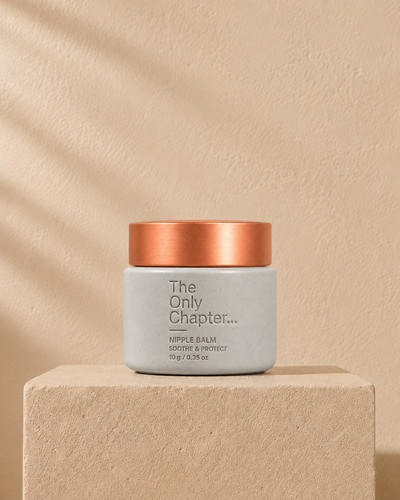
Our Nipple Balm is built around the lanolin-free, food-grade base described above — it does not need to be wiped before feeds.
Nipple thrush
Thrush requires antifungal treatment. It will not resolve with balms or latch fixing alone.
- See your GP or health visitor. They will usually prescribe an antifungal cream (miconazole 2% or nystatin) for you and an oral antifungal gel (miconazole gel) for the baby — both treated simultaneously because thrush bounces back and forth between mother and baby otherwise
- Treatment course is typically 14 days, even if symptoms improve sooner — stopping early is the most common reason thrush returns
- Wash all nursing pads, bras and pumping equipment in hot water (60°C+) daily during treatment
- Continue breastfeeding through treatment — the antifungal is compatible with feeding
- Some women find a low-sugar diet during the 14 days reduces recurrence
- Probiotic supplementation may help, particularly if the thrush developed after antibiotics
Persistent thrush sometimes requires oral fluconazole for the mother — prescribed by a GP. This is reserved for cases where topical treatment fails after 14 days.
When to escalate
See a GP urgently if you have: red streaking going up the breast (suggests mastitis, needs antibiotics same day), fever above 38°C, hard painful lump in the breast (blocked duct or mastitis), severe pain that prevents you from feeding, or signs of infection in the baby (fewer feeds, fewer wet nappies, unusual fussiness).
The brand take
Thrush is one of the most common reasons women stop breastfeeding earlier than they wanted to. It is highly treatable — but only if you get the diagnosis right. If the pain is shooting deep into the breast, if it continues between feeds, if the nipple looks shiny pink rather than visibly cracked — get a GP appointment within 48 hours. Antifungal cream + oral gel for both of you for 14 days is the standard treatment, and most women feel better within 3 to 5 days of starting it.
FAQ
How do I know if I have nipple thrush?
The three classic signs are: shiny pink or red nipples without visible cracks, sharp deep shooting pain especially between feeds, and white patches in the baby's mouth that don't wipe off. If you have two of those three, see a GP for treatment.
Can I treat nipple thrush at home?
Topical treatment requires a prescription — miconazole or nystatin. Some over-the-counter antifungals exist but the NHS-prescribed ones are dose-correct for breastfeeding. Treating both mother and baby simultaneously is essential.
How long does nipple thrush last?
With proper antifungal treatment, most women feel relief within 3–5 days. Full treatment course is 14 days. Untreated, thrush can persist for months.
Can I keep breastfeeding with thrush?
Yes — NHS guidance is to continue breastfeeding through treatment. The antifungal is compatible with nursing.
Why does my nipple thrush keep coming back?
Most often: stopping treatment too soon (full 14 days is needed even if symptoms improve), not treating the baby simultaneously (it bounces back), or not washing pads/bras in hot water during treatment.