In the first six weeks postpartum, the right skincare routine is the simplest one. Three products, applied once a day, take under five minutes: a gentle cleanser, a barrier cream within the damp-skin window, and a nipple balm if you're breastfeeding. The goal is not optimisation — it is to support a healing body without adding any active ingredient that doesn't belong yet.
Why the first six weeks are different
The postpartum skin barrier needs about six weeks to stabilise. During that period:
- The estrogen-progesterone drop has just happened. Sebum production crashes and transepidermal water loss rises.
- Sleep deprivation suppresses the skin's overnight repair cycle.
- Hormonal sensitivity is at its peak — many mothers find that products that worked during pregnancy now sting.
- If you had a c-section, the incision is still actively closing.
- If you're breastfeeding, the same systemic concerns about active ingredients apply.
This is not the window for retinoids, chemical exfoliants or layered serums. It is the window for barrier work, hydration, and not over-thinking.
The three-product routine
1. Gentle cleanser
Choose a fragrance-free, low-foam, pH-balanced cleanser. Brand examples that fit the brief: La Roche-Posay Toleriane Caring Wash, CeraVe Hydrating Cleanser, Avène Tolérance Hydra-10 Cleansing Cream. Use lukewarm water — not hot. Pat dry rather than rub.
2. Barrier body cream — within sixty seconds of stepping out of the shower
The "damp-skin window" is the most important sixty seconds in postpartum skincare. Humectants (glycerin, sodium hyaluronate) absorb most effectively into still-damp skin. Lipids (ceramides, squalane) seal that moisture in. Apply the cream to:
- Belly and lower abdomen (especially over any stretch marks)
- Breasts, avoiding the areola if breastfeeding
- Hips and outer thighs
- Lower back
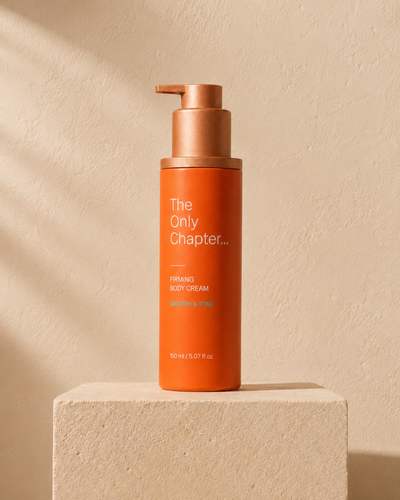
Our Firming Body Cream is formulated for exactly this step — squalane, ceramides, peptides and niacinamide in proportions that match the early-postpartum barrier needs.
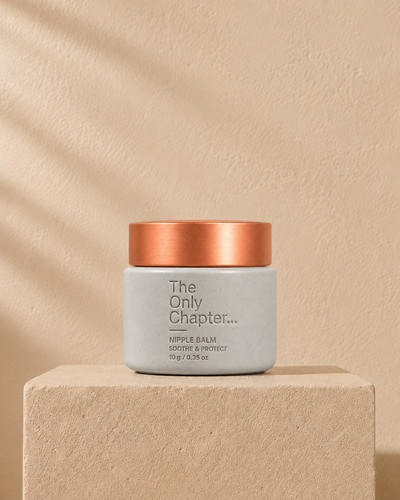
3. Nipple balm (only if breastfeeding or pumping)
Applied after each feed, not on a fixed schedule. A pea-sized amount, smoothed gently, no wiping before the next feed if the balm is lanolin-free and food-grade. See how to apply nipple balm for the full technique.
That is the entire routine for the first six weeks. No serums, no masks, no targeted treatments. If your skin asks for more — usually in the third or fourth week — add a few drops of body oil on the driest areas. That's it.
What to add (and avoid) by week
Week 1
Healing dominates. Stick to the three core products. Avoid anything new. If you had a c-section, do not put anything on the incision unless your midwife has specifically advised it.
Weeks 2–3
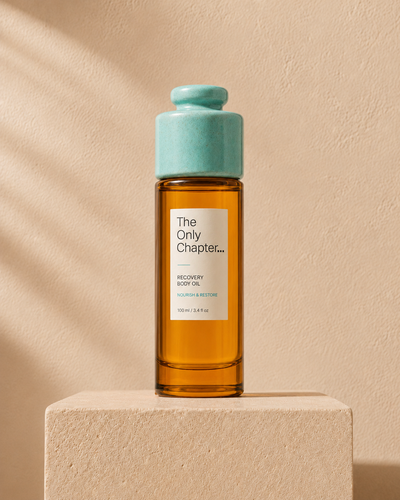
Many mothers experience peak night sweats and skin dryness. Add a few drops of a clean body oil — we use Recovery Body Oil with squalane, rosehip and sea buckthorn — over the cream on the driest areas. Do not add active ingredients yet.
Weeks 4–5
The barrier is starting to recover. If stretch marks are still red, this is the start of the responsive window — but resist starting any aggressive treatment until week 6 for c-section recoveries.
Week 6
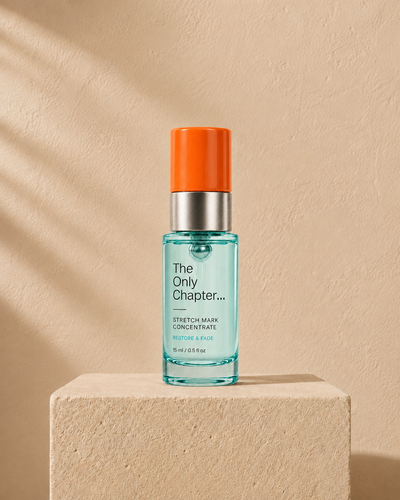
The six-week check is the moment to reassess. If cleared by your midwife or GP, you can start gentle targeted treatments — typically a stretch mark concentrate for fresh marks, or silicone-based scar care for c-section incisions. These belong in the next phase of the routine.
Ingredients to avoid in the first six weeks
While breastfeeding, the general avoid list applies (see our retinol guide for the full reasoning):
- All topical retinoids (retinol, tretinoin, retinyl palmitate)
- Salicylic acid above 2%
- Hydroquinone
- Glycolic and lactic acid peels above 10%
- Peppermint, eucalyptus and rosemary essential oils at high concentration
You can return to most of these once you have weaned, with the exception of retinoids which can be reintroduced gradually after breastfeeding stops.
Pacing the routine when sleep is broken
Most postpartum routines fail because they assume a normal day. They do not survive the reality of feeding every two hours through the night. To make the routine actually happen:
- Keep the cleanser, cream and nipple balm in arm's reach of where you actually shower (the bathroom counter, not a cupboard).
- Apply the cream while still in the bathroom — don't move to the bedroom to do it.
- Skip days when you need to. Three days a week of consistent barrier care is better than seven days of guilt-driven complexity.
- Use partner help if available: the cream applied to the upper back by someone else is one of the small luxuries that makes a difference.
FAQ on the first-six-weeks routine
How soon after birth can I shower?
Usually within 24 hours of a vaginal birth and 48 hours of a c-section, but follow your hospital's guidance. Avoid hot baths until your lochia (postpartum bleeding) has stopped, around week 4–6.
Can I use the same body cream on my face?
A body cream is too rich for facial skin and may cause breakouts. Use a separate light facial moisturiser — niacinamide-based formulations are particularly good in the early postpartum.
What if I had a c-section — do I skip the cream over the incision?
Yes, until the incision is fully closed (usually 4–6 weeks). Apply the cream to surrounding areas but not directly on the wound. After closure, see our c-section scar guide.
Is it normal that my skin is more sensitive than during pregnancy?
Yes. The estrogen drop disrupts the barrier far more than pregnancy did. Sensitivity typically improves by month 3 in most women.
Should I worry about postpartum acne?
Hormone-driven acne is common in the first months. Avoid salicylic acid above 2% while breastfeeding; use azelaic acid (breastfeeding-safe) or niacinamide instead.
How do I tell if my barrier is "okay" again?
If your skin feels comfortable, doesn't sting when you apply products, and the dryness in the first weeks has subsided — you're back to baseline. This usually happens around week 6–8.
For the complete framework after six weeks, see our postpartum skincare guide.